
Brand comparison
SOK vs Renogy
SOK scores 5.9 across 7 products; Renogy scores 5.4 across 58. They overlap in lifepo4 batteries. That is 100% of what SOK sells and 14% of what Renogy sells. SOK leads on warranty & support, Renogy on efficiency.
 All 7 SOK products
SOK
7 of 7 products scored · $319 – $1,149
Buy Now- Warranty & Support — 7.0 against 4.0
- Capacity — 7.0 against 5.0

 All 58 Renogy products
Renogy
58 of 58 products scored · $90 – $1,089
Buy Now- Efficiency — 5.0 against 4.0
- Lifespan — 4.5 against 4.0
Across everything we scored, SOK sits 0.44 ahead — led by warranty & support.
Brand verdict
ahead · +0.44 (5.9 vs 5.4)
Pick SOK when
Warranty & support matters most7.0vs4.0
Pick Renogy when
Efficiency matters most5.0vs4.0
Scored 15 October 2026 from published specs and owner reviews. We don't buy or test units. How we score
Most common complaints
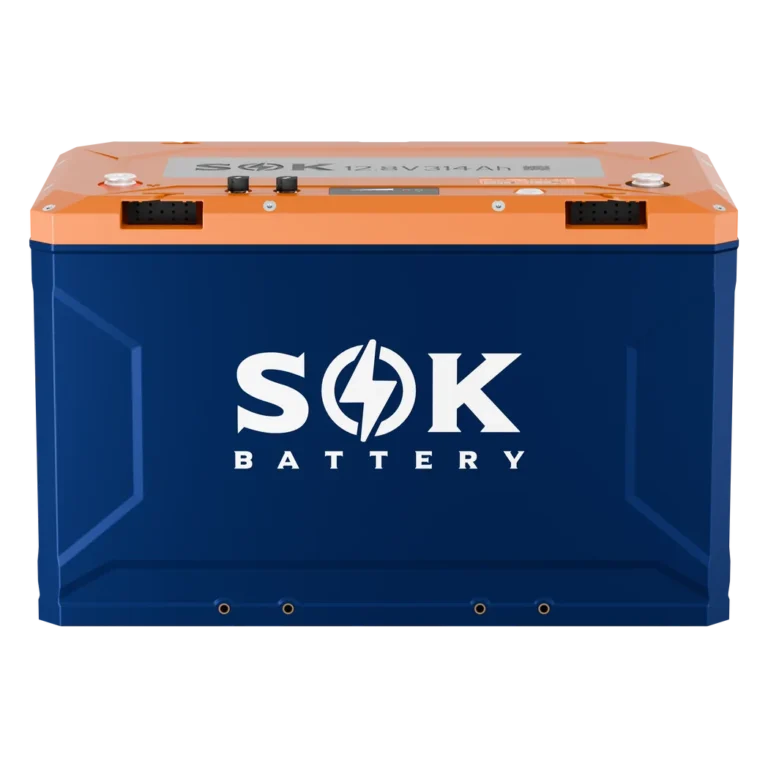
SOK 12V 314Ah Heated Marine LiFePO4 Battery with Victron CAN
Overall score 6.3- High-cell alarms at full charge
- BMS stops charging near 14 V
- One cell running high, no fix after months
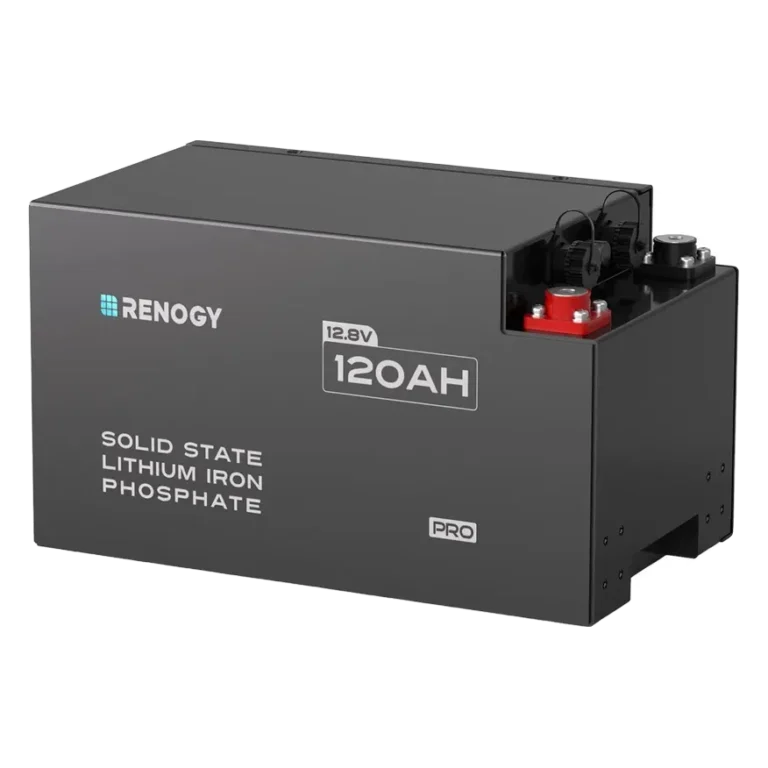
Renogy Pro S1 12V 120Ah Self-Heating LiFePO4 Battery
Overall score 5.7- Label reads 120 A continuous against 150 A on Renogy's site, per one tester
- Cell voltages shown only to 0.1 V in the app, per one tester
From owner reviews of each brand's top-scored product in LiFePO4 Batteries.
Usability SOK and Renogy, median scores 0 to 10
Median scores on a 0–10 scale.
Warranty & SupportSOK: 7 (higher)Renogy: 4
SOK top-scored: 12V 314Ah Heated Marine LiFePO4 Battery with Victron CAN
- 7 years on SOK's warranty page, no proration stated
Renogy top-scored: Pro S1 12V 120Ah Self-Heating LiFePO4 Battery
- 7-year prorated material and workmanship warranty
- Conflict: the warranty document says prorated; the product page says only 7 years
CapacitySOK: 7 (higher)Renogy: 5
SOK top-scored: 12V 314Ah Heated Marine LiFePO4 Battery with Victron CAN
- 12.8 V times 314 Ah is 4,019 Wh, on the 3,800 to 4,999 Wh rung
Renogy top-scored: Pro S1 12V 120Ah Self-Heating LiFePO4 Battery
- 12.8 V and 120 Ah give 1,536 Wh
- Size: a 12.8 x 7.44 x 7.4 in IP67 case
FeaturesSOK: 7 (higher)Renogy: 5.5
SOK top-scored: 12V 314Ah Heated Marine LiFePO4 Battery with Victron CAN
- Heater, Bluetooth, Victron CAN, IP67, 4 in series or 10 in parallel
- Heater: the manual says heating turns on below 23°F (-5°C)
- Comms: CAN to Victron GX or NMEA 2000, RS485 between batteries
- Safety: gas aerosol fire suppression and an on/off switch
Renogy top-scored: Pro S1 12V 120Ah Self-Heating LiFePO4 Battery
- 85 W heater, Bluetooth, two CAN ports, IP67 and 4S4P: every point on the scale
- Heater: runs below 41 °F while charge current stays above 10 A
- Warm-up: about 2 hours from -4 °F to 32 °F, by the manual
- CAN: RJ45 ports; cables and termination resistors sold separately
EfficiencySOK: 4Renogy: 5 (higher)
SOK top-scored: 12V 314Ah Heated Marine LiFePO4 Battery with Victron CAN
- 60.0 Wh per pound at 67 lb, on the 58 to 64.9 rung
- Weight: the manual gives about 30 kg
Renogy top-scored: Pro S1 12V 120Ah Self-Heating LiFePO4 Battery
- 1,536 Wh in 29.5 lb, 52.1 Wh per pound
LifespanSOK: 4Renogy: 4.5 (higher)
SOK top-scored: 12V 314Ah Heated Marine LiFePO4 Battery with Victron CAN
- More than 8,000 cycles in the manual; no end-of-life capacity published
- Conflict: the product page claims 15000+ cycles
- Cells: the spec sheet rates the cells for more than 8,000 cycles
Renogy top-scored: Pro S1 12V 120Ah Self-Heating LiFePO4 Battery
- 6,000 cycles at 80 percent depth of discharge, retaining 80 percent
- Method: one rung down for the shallower depth
Same score
Operating RangeSOK: 5Renogy: 5
SOK top-scored: 12V 314Ah Heated Marine LiFePO4 Battery with Victron CAN
- 200 A maximum continuous discharge, 0.64C on 314 Ah
- Peak: the product page gives 800 A for 7.5 seconds, give or take 2.5
- Temperature: discharges from -4 to 140°F
Renogy top-scored: Pro S1 12V 120Ah Self-Heating LiFePO4 Battery
- 150 A continuous, 1.25C on 120 Ah, with 350 A for 30 seconds
- Conflict: a paid tester found 120 A continuous on the label against 150 A on Renogy's site
- Charge: 120 A continuous
VerificationSOK: 2Renogy: 2
SOK top-scored: 12V 314Ah Heated Marine LiFePO4 Battery with Victron CAN
- Verification: cell-level UL 1973 claim only; no pack record in any directory
- Store claim: UL 1973 and IEC 62619 for the cells only
- Intertek: no record for this model (Hocan Group records cover SK48V100 and SK12V206H/PH)
- Other directories: no record at UL Product iQ, LabTest, TÜV Rheinland or the CEC battery list
- ABYC compliance paperwork: installation practice, not a listing
Renogy top-scored: Pro S1 12V 120Ah Self-Heating LiFePO4 Battery
- No certifier directory lists this model
- Searched: Intertek, UL Product iQ, CSA, SGS, TÜV and the CEC lists
Social score about SOK and Renogy
Independent sources pooled per brand. N of M = how many scored products carry the brand-level reading shown, out of all scored.
RedditSOK: 6 (higher)Renogy: 5
SOK
Read the full summary
- Repairs: on r/vandwellers an owner whose SOK arrived with a bad BMS said support sent a new BMS module, no questions asked, and he swapped it himself (May 2024)
- Reliability: in the same thread one owner reported two years on solar with 412 Ah of SOKs and another two years of daily use on a 206 Ah, both without problems (May 2024)
- Load: another commenter there called SOKs fit only for low-stress use, saying their BMS burns out on big inverters or large charge sources (May 2024)
- BMS: an r/SolarDIY owner of four 206 Ah units in a 24 V bank asked whether a BMS was faulty when one battery read 13 percent beside its partner at 100 percent (October 2025)
Brand rollup across scored products. 6 of 7 scored products carry this reading.
YouTubeSOK: 7 (higher)Renogy: 6
AmazonSOK: 6Renogy: 7 (higher)
SOK
Read the full summary
- Largest file: the 12V 206Ah metal-case self-heating listing reads 4.6 from 23 ratings, 84 percent five-star and 8 percent one-star (October 2026)
- Other listings: a second 206Ah self-heating listing reads 4.7 from 18, the 206Ah IP65 4.8 from 6, the 314Ah 5.0 from 6, and two 280Ah listings 4.8 from 4 and 5.0 from 6 (October 2026)
- Seller: every listing read ships from and is sold by SOK Battery-SUNMAXENERGY through the SOK Battery Store
Brand rollup across scored products. 3 of 7 scored products carry this reading.
Renogy
Read the full summary
- Pools: Renogy's LiFePO4 listings on Amazon US hold far smaller pools than its panels
- Core Mini 100Ah: 4.5 from 45 ratings, 83 percent five-star against 9 percent one-star
- Pro 100Ah: 4.4 from 10
- DuoHeat 100Ah: the DuoHeat Core Mini 100Ah reads 4.0 from 9, split 76 percent five-star against 24 percent one-star
Brand rollup across scored products. 4 of 58 scored products carry this reading.
Same score
GoogleSOK: 5Renogy: 5
SOK
Read the full summary
- Warranty: on DIY Solar Forum an owner of three 206 Ah units said SOK told him to buy a shunt rather than replace a BMS reading zero with a 22 A drain, and he left the brand (May 2024)
- Monitoring: an owner of three 200 Ah units said the BMS state of charge was never accurate, but each battery measured over 210 Ah (DIY Solar Forum, May 2024)
- Failures: Will Prowse, the forum's founder, posted two owners' 12 V SOK failures with heat damage (July 2025) He carries SOK affiliate links and takes paid promotion
- Longevity: in that thread a 206 Ah owner reported four years and about 50,000 RV miles without issue, while another said his Bluetooth-BMS units self-discharge faster (July 2025)
Brand rollup across scored products. 1 of 7 scored products carry this reading.
Renogy
Read the full summary
- Footprint Hero: links Renogy panels through Amazon and Renogy's own affiliate program Ranked Renogy's older 100 W mono panel first of five 100 W panels it tested
- Tests: 71.6 W peak in a December output test (2021) and 570 Wh over 24 hours against 490 Wh from a Newpowa (2023)
- DIY Solar Forum: a 2022 thread opens with an owner whose Renogy gear still works after a decade
- Low output: a thread titled 'I only get 85W out of my Two Renogy 100W panels' reports one panel as low as 40 percent of rating and four averaging 54 percent
Brand rollup across scored products. 7 of 58 scored products carry this reading.
Not enough data for either brand
- Owner reviewsSOK: not scoredRenogy: not scored
The scores above are our reading of the evidence below. This is the evidence.
Safety listings are recorded per product from the certifier's own directory, by model, not from the maker's wording. Most of the listings in this category can be checked in Intertek's directory of listed products.
Warranty terms
SOK
7 of 7
Renogy
58 of 58
What only SOK sells — and only Renogy
Not a loss for either brand. If you need one of these, the choice is already made.
Only SOK
Nothing outside the shared categories.
Only Renogy
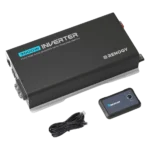
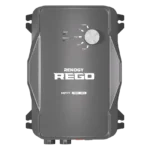
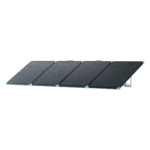
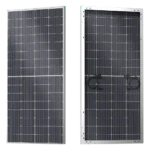
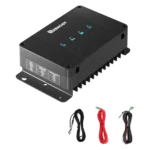
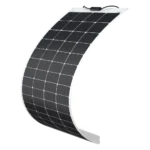
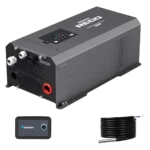
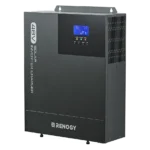
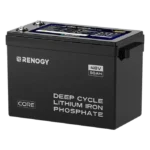
Best SOK vs best Renogy, category by category
The three best-scoring products each brand sells in every category they both compete in, ranked by overall score.
LiFePO4 Batteries
See all LiFePO4 Batteries products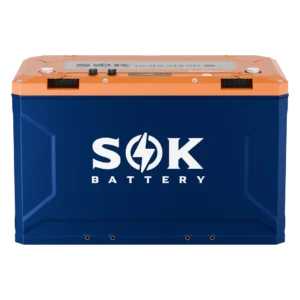
4th of 80 in LiFePO4
Strengths
- Large capacity in one sealed case
- Light for its capacity
- Built-in heater for cold charging
- Talks to Victron GX over CAN
Drawbacks
- Low continuous current for its size
- Cycle claims differ across SOK's own pages
- No end-of-life capacity published
- Charge voltage differs across SOK's documents
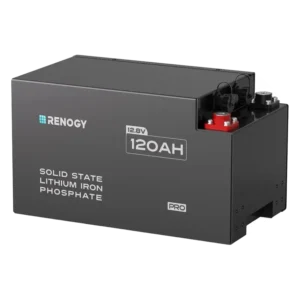
39th of 80 in LiFePO4
Strengths
- Strong continuous and 30-second discharge
- Expands to 48 V and 24.576 kWh
- CAN ports plus built-in Bluetooth
- Self-heating with a stated warm-up time
Drawbacks
- Semi-solid-state rests on Renogy's own description
- Heater needs a strong charge current
- Warranty proration stated two ways
- CAN cables and resistors sold separately
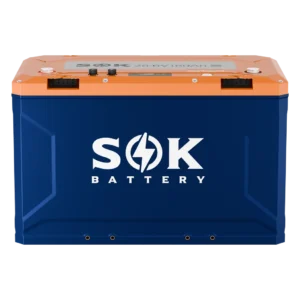
16th of 80 in LiFePO4
Strengths
- Large capacity in one sealed case
- Built-in heater for cold charging
- Talks to Victron GX over CAN
- Waterproofdustproof case
Drawbacks
- Ratings differ across SOK's pagespec sheet and manual
- No end-of-life capacity published
- Only two in series
- Series or parallelnever both
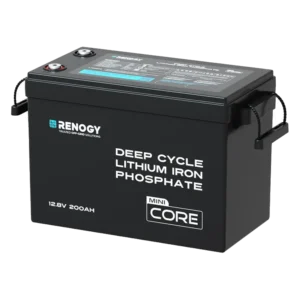
45th of 80 in LiFePO4
Strengths
- Light for its capacity
- Strong continuous and peak BMS rating
- IP65 case
- Expands to 16 batteries as 4S4P
Drawbacks
- No heaterno charging below freezing
- No Bluetooth or portmonitoring needs a shunt
- Cycle rating at partial depth of discharge
- Charge current capped at 100 A
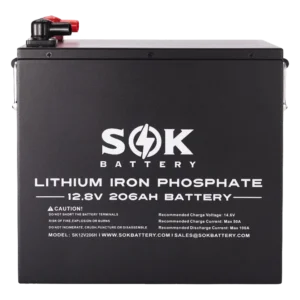
16th of 80 in LiFePO4
Strengths
- Built-in heater for cold charging
- Bluetooth monitoring through a phone app
- User-serviceablewith replaceable BMS and cells
- Large capacity in one 12 V case
Drawbacks
- Low continuous current for its capacity
- Page and spec sheet disagree on current and weight
- Cycle rating at partial depthwith no end point
- No CAN or RS485 battery communication
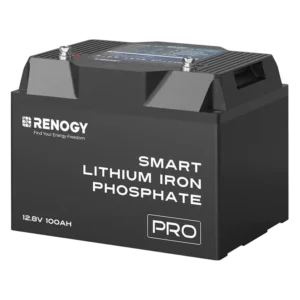
45th of 80 in LiFePO4
Strengths
- Self-heating with a modest charge current
- Bluetooth built in
- IP67 flame-retardant case
- Strong 30-second surge
Drawbacks
- Parallel onlyno series wiring
- No CAN or RS485 port
- Heavy for its capacity
- Warranty proration stated two ways
SOK vs Renogy: the numbers
SOK vs Renogy: common questions
Is SOK or Renogy better?
SOK 5.9 from 7 scored products; Renogy 5.4 from 58.
What is the biggest difference between SOK and Renogy?
Warranty & Support: SOK medians 7.0, Renogy medians 4.0 (SOK by 3.0).
Which is better for capacity, SOK or Renogy?
SOK on capacity — SOK 7.0, Renogy 5.0.
Which is better for features, SOK or Renogy?
SOK on features — SOK 7.0, Renogy 5.5.
What does Renogy make that SOK does not?
Renogy sells power inverters, charge controllers, portable solar panels, rigid solar panels, dc-dc chargers, flexible solar panels, inverter-chargers, all-in-one off-grid inverters, and server-rack and wall batteries; SOK does not, in the products we scored.
Which SOK and Renogy lifepo4 batteries should I buy?
SOK: SOK 12V 314Ah Heated Marine LiFePO4 Battery with Victron CAN. Renogy: Renogy Pro S1 12V 120Ah Self-Heating LiFePO4 Battery.
How does Stuff VS Things score SOK and Renogy?
Our own product medians: 7 SOK and 58 Renogy. A criterion is compared only where both brands clear the floor.
Other comparisons







Scores calculated 15 October 2026 · Products excluded where fewer than two independent sources cover them · · How we score