LiTime 60A MPPT Solar Charge Controller
SVT Score, Lower
A 60 A MPPT controller for 12 to 48 V banks with a 30 A load output, a low-temperature charge stop and no Bluetooth.
$160
We may earn a commission if you buy through this link. It never affects our scores. How this works
Usability
4.7 out of 10At 60 A it sits on the 8 rung for a charge controller, so it scores 8 on capacity.
LiTime's page and manual both give 96 percent peak conversion efficiency, so it scores 4 on efficiency.
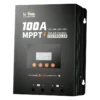 Better on efficiencyLiTime 100A MPPT ControllerLiTime's page. $282.99Scores 8.0
LiTime's spec table gives a 150 V maximum PV input, the 7 rung, though its current manual gives 200 V, so it scores 7 on operating range.
It has a remote temperature sensor and a 30 A load output but no Bluetooth, no stated parallel operation, and its manual reserves the custom battery type for internal testing, so it scores 4 on features.
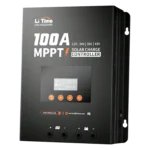
Better on featuresLiTime 100A MPPT ControllerHas Bluetooth built in. $282.99Scores 6.0No certifier directory lists this unit (Intertek, UL, CSA, LabTest, TÜV, SGS), and LiTime's manual shows only FCC, CE and RoHS marks, so it scores 2 on verification.
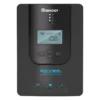 Better on verificationRenogy Rover Li 40A Controller$205.99Scores 4.0
LiTime's US warranty policy gives charge controllers 3 years and its Canadian policy 2 years, and the shorter term is scored, so it scores 3 on warranty and support.
LiTime sets warranty terms by product, for the original buyer only, with proof of purchase.
$159.99 at litime.com.
No Bluetooth, 30 A load output
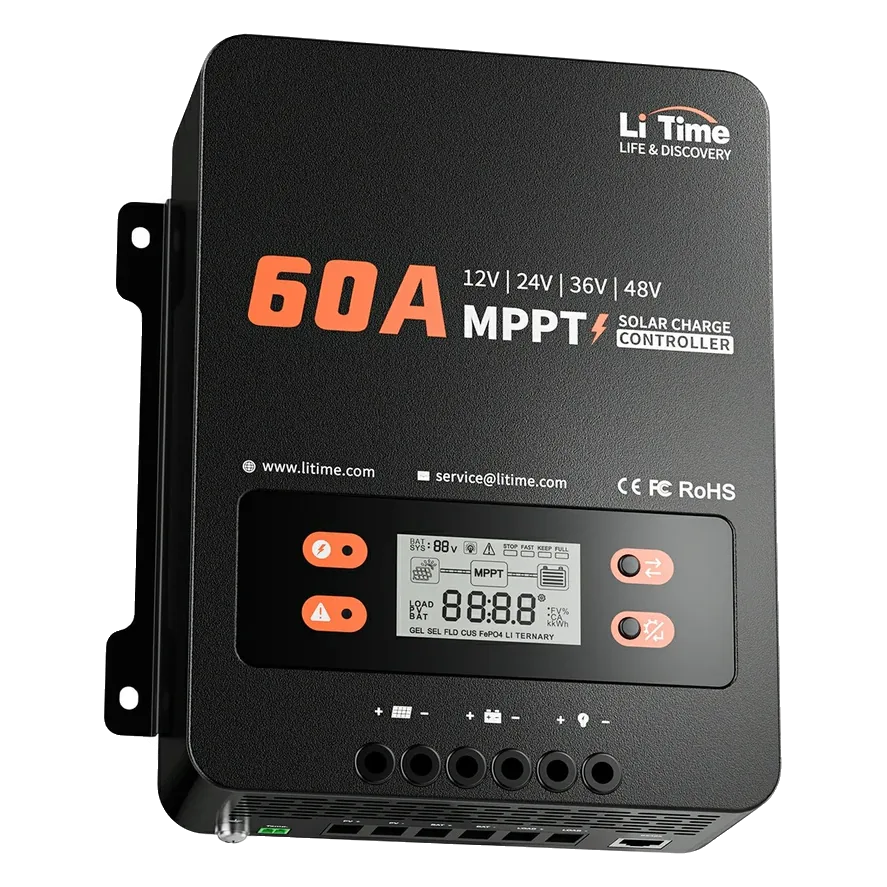
The L48V60A-MPPT-A1 is LiTime's 60 A MPPT solar charge controller without Bluetooth for 12, 24, 36 and 48 V banks in RVs, cabins and off-grid homes.
It suits a buyer with up to 3,480 W of panels on a 48 V bank who reads the controller at its screen, and who will not need phone monitoring or a hand-set LiFePO4 charge profile.
Strengths
- 60 A into 1224, 36 or 48 V banks
- 30 A DC load output
- Up to 3,480 W of panels at 48 V
- Stops lithium charging below 32°F with its sensor
- No-load loss of 1 W to 1.2 W
Drawbacks
- No Bluetooththe Bluetooth model is $229.99
- 96 percent peak conversion efficiency
- Manual reserves the custom battery type for testing
- PV limit is 150 V on the page200 V in the manual
- 2-year term on LiTime Canada against 3 years on its US policy
Specs
- CapacityNot applicable
- AC OutputNot applicable
- System Voltage12/24/48 V auto
- Panel PowerNot applicable
- Charge Current60-79 A
- Safety ListingNone verifiable
- Cell TypeNot applicable
- Low-Temp ChargingNot applicable
- Warranty2 Years
- MonitoringWired display or port only
- Weight3.8 lb
At a glance
- 8.66 x 7.76 x 2.76 in
- Takes up to 6 AWG wire
- Two-button LCD, cooling fan
- Six wire lugs, heat shrink
LiTime is the brand of Shenzhen Ampere Time Digital Energy Technology, founded in 2018 and renamed from Ampere Time in December 2022.
It sells direct from litime.com, which ships US orders from warehouses in Los Angeles and Dallas, and through its Amazon store and Walmart's marketplace.
The LiTime L48V60A-MPPT-A1 is a 60 A MPPT solar charge controller for 12, 24, 36 and 48 V banks, sold without Bluetooth. LiTime's spec table gives a 150 V maximum PV input and a tracking range from battery voltage plus 3 V to 120 V; its current user manual and Amazon listing give 200 V and up to 180 V. It accepts up to 870 W of panels at 12 V, 1,740 W at 24 V, 2,610 W at 36 V and 3,480 W at 48 V, charges batteries from 9 V to 63 V, and LiTime rates it at 96 percent peak conversion efficiency and 99 percent tracking efficiency, with a no-load loss of 1 W to 1.2 W (1 W to 1.5 W in the manual). It ships set to 12 V LiFePO4 (FePO4 mode); lead-acid banks can be detected automatically, LiFePO4 voltage is set by hand, and the manual reserves its CUS and LI types for internal testing. A 30 A DC load output switches on or off from the menu, and a remote temperature sensor in the box stops lithium charging below 32°F (0°C) and resumes above 41°F (5°C), a function that is off by default. It has a two-button LCD, charge and fault LEDs, a cooling fan and a communication port, operates from -4°F to 122°F, measures 8.66 x 7.76 x 2.76 in with its mounting part (6.57 in wide without) and weighs 3.75 lb, and takes up to 6 AWG wire. The box holds the sensor, a magic sticker, four screws, four plastic anchors, six copper wire connectors and three pairs of heat-shrink tubes. LiTime's 60A Bluetooth model (L48V60A-MPPT-BT-E1, $229.99) adds Bluetooth 5.0 and a 97 percent peak conversion rating, with a 20 A load output, a 150 V input, four buttons and a larger 11.02 x 8.27 x 4.04 in, 10.03 lb die-cast case. The 60A sells at $159.99 with LiTime's 3-year charge controller warranty.
Compared in



Questions answered from our data
 Is LiTime good?We list 25 LiTime products and score 25 of them. Their overall scores run from 4.2 to 6.3, with a median of 5.4, against a median of 5.4 for all 83 products we score.
 How much does an MPPT charge controller cost?The 11 MPPT charge controllers we list run from $90 to $702, with a median of $250.
 Are MPPT charge controllers UL listed?Two of the 11 MPPT charge controllers we list carry a UL 1741-type listing we could look up by model.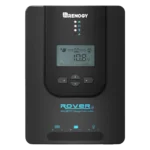
 Which MPPT charge controllers have Bluetooth?10 of the 11 MPPT charge controllers we list offer Bluetooth monitoring, built in or as the maker's add-on.