LiTime 48V 3500W All-in-One Solar Inverter Charger
SVT Score, Mid
A 3,500 W, 120 V all-in-one for 48 V banks with an 80 A MPPT, a 40 A AC charger, about 10 ms transfer and RS485 battery communication, but no paralleling.
$530
We may earn a commission if you buy through this link. It never affects our scores. How this works
Usability
3.5 out of 10At 3,500 W continuous it sits on the 3,500 to 4,999 W rung for a 48 V all-in-one, so it scores 3 on capacity.
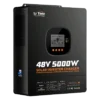 Better on capacityLiTime 48V 5kW All-in-One Inverter$699.99Scores 5.0
LiTime rates its inverter efficiency above 91 percent, which meets the 6 rung, and its normal-mode no-load draw under 50 W is 14.3 W per kW of its 3,500 W rating, which meets the 4 rung (ECO mode under 30 W is 8.6 W per kW), so with one input on each rung it scores 5 on efficiency.
Its 6,000 W surge for 5 seconds is 1.7 times its continuous rating, so it scores 3 on operating range.
Better on operating rangeLiTime 48V 5kW All-in-One InverterSpec table gives no surge figure. $699.99Scores 5.0It has a built-in MPPT controller, a transfer of about 10 ms by LiTime's product FAQ, an RS485 port that reads a matched battery's BMS and a 40 A AC charger, 160 A at 12 V-equivalent, but its manual states it does not support paralleling and it has no split-phase output and no Bluetooth or app, so it scores 6 on features.
No certifier directory lists this unit (Intertek, UL, CSA, LabTest, TÜV, SGS), and LiTime's page and manual name no safety listing, so it scores 2 on verification.
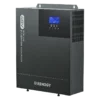 Better on verificationRenogy 3500W 48V Pure Sine Inverter Charger$599.99Scores 4.0
LiTime's product page gives it a 2-year warranty, and the warranty policy table does not list this model, so it scores 3 on warranty and support.
LiTime sets warranty terms by product, for the original buyer only, with proof of purchase.
$529.99 at litime.com.
One-Box 120 V backup, no stacking
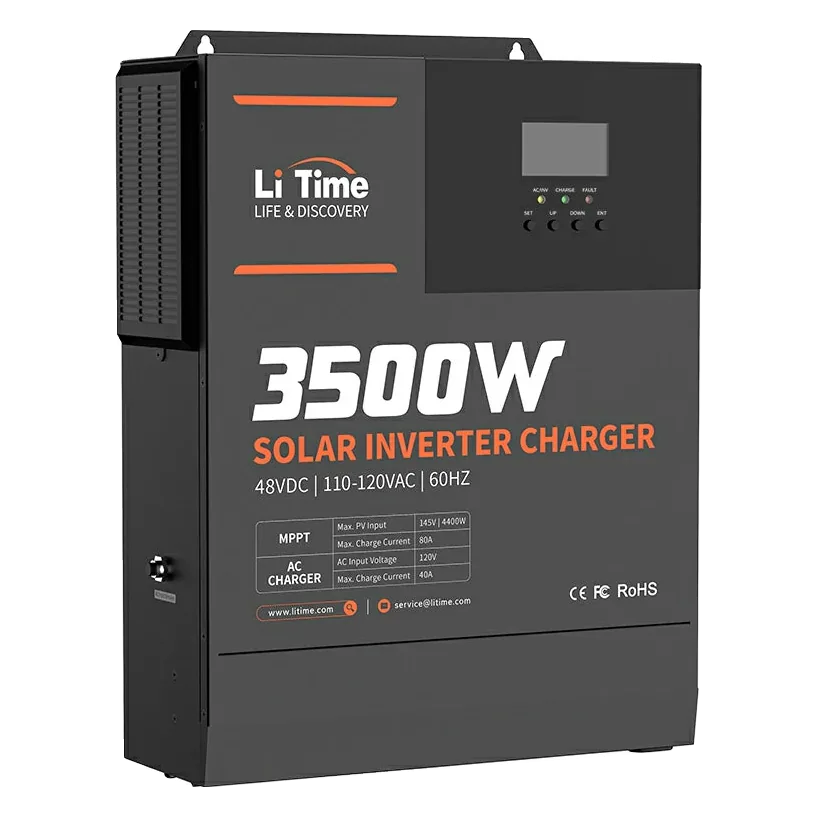
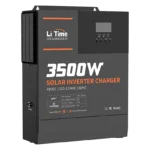
The L-HYBINV-48V3KW-S is LiTime's 48 V all-in-one solar inverter charger, a 3,500 W, 120 V pure sine wave inverter with an 80 A MPPT controller and a 40 A AC charger for a cabin, shed or home backup bank.
It suits a buyer who wants one 120 V all-in-one for a 48 V cabin or backup bank under 3,500 W, and who will not need 240 V loads, a second unit in parallel or phone monitoring.
Strengths
- About 10 ms transfer to batteryper LiTime's FAQ
- 80 A MPPT60-145 V PV input, 4,400 W max
- 40 A AC charger120 A combined with solar
- RS485 port reads a matched battery's BMS
- ECO mode cuts no-load draw to under 30 W
Drawbacks
- Manual says it does not support paralleling
- 120 V onlyno split-phase or 240 V output
- No BluetoothWi-Fi or app; LCD and RS485 only
- 6,000 W surge is 1.7 times its rating
- Product page calls it 3000W rated in one line and 3500W elsewhere
Specs
- CapacityNot applicable
- AC Output3,000-3,999 W
- System Voltage48 V
- Panel PowerNot applicable
- Charge Current40-49 A
- Safety ListingNone verifiable
- Cell TypeNot applicable
- Low-Temp ChargingNot applicable
- Warranty2 Years
- MonitoringWired display or port only
- Weight23.2 lb
At a glance
- M6 battery terminals
- 16.77 x 13.23 x 4.88 in
- USB-B and dry contact ports
- Sold in $2,298.48 150Ah kit
LiTime is the brand of Shenzhen Ampere Time Digital Energy Technology, founded in 2018 and renamed from Ampere Time in December 2022.
It sells direct from litime.com, which ships US orders from warehouses in Los Angeles and Dallas, and through its Amazon store and Walmart's marketplace.
The LiTime L-HYBINV-48V3KW-S is a 48 V all-in-one solar inverter charger: a 3,500 W pure sine wave inverter with 120 V AC 60 Hz output and a 6,000 W surge for 5 seconds, an 80 A MPPT solar controller and a 40 A AC charger, with up to 120 A of combined solar and AC charging. Its PV input runs from 60 V to 145 V (60 V to 115 V recommended) at up to 4,400 W and 50 A, with MPPT efficiency above 94 percent; LiTime rates the inverter above 91 percent efficient and its no-load draw under 50 W in normal mode and under 30 W in ECO mode. The battery side takes 40 V to 60 V on M6 terminals and charges lithium, lead-acid and user-defined profiles, defaulting to 16-cell LiFePO4. It has an LCD screen with LED indicators, a USB-B port, dry contact ports and an RS485 port that reads a protocol-matched battery's BMS; LiTime's product FAQ puts its switch from utility to battery or solar at about 10 ms, and its manual states that it does not support paralleling and that CAN is unavailable on this machine. It operates from 14°F to 131°F, measures 16.77 x 13.23 x 4.88 in and weighs 23.15 lb. The box holds 8 copper wire connectors, 2 M6 battery post bolts, 2 M6 battery lugs, 2 pairs of MC4 connectors, wall anchors and screws, heat shrink tubes, a slotted screwdriver and a printed manual. LiTime sells it with its 48V 150Ah 300A Bluetooth battery (7.68 kWh) as a home backup all-in-one kit at $2,298.48, where the kit option names it a 3000W inverter charger. LiTime's product page gives it a 2-year warranty.

Questions answered from our data
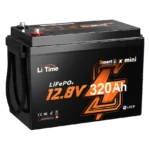
 Is LiTime good?We list 25 LiTime products and score 25 of them. Their overall scores run from 4.2 to 6.3, with a median of 5.4, against a median of 5.4 for all 83 products we score.
 How much does an off-grid inverter cost?The 4 off grid inverters we list run from $530 to $770, with a median of $650.
 Are off-grid inverters UL listed?None of the 4 off grid inverters we list carry a UL 1741-type listing we could look up by model.
- Which off-grid inverters give 3,000 W or more?Four of the 4 off grid inverters we list are rated for 3,000 W or more, continuous.