
Product comparison · Reverse Osmosis
APEC ROTL‑600 vs iSpring RO800G
The APEC ROTL-600 scores 5.8 and ranks 42nd of 69 in Reverse Osmosis; the iSpring RO800G scores 5.5 and ranks 51st of 69 in Reverse Osmosis. The ROTL-600 leads on warranty & support, the RO800G on contaminant reduction.
 All 22 APEC Water Systems products
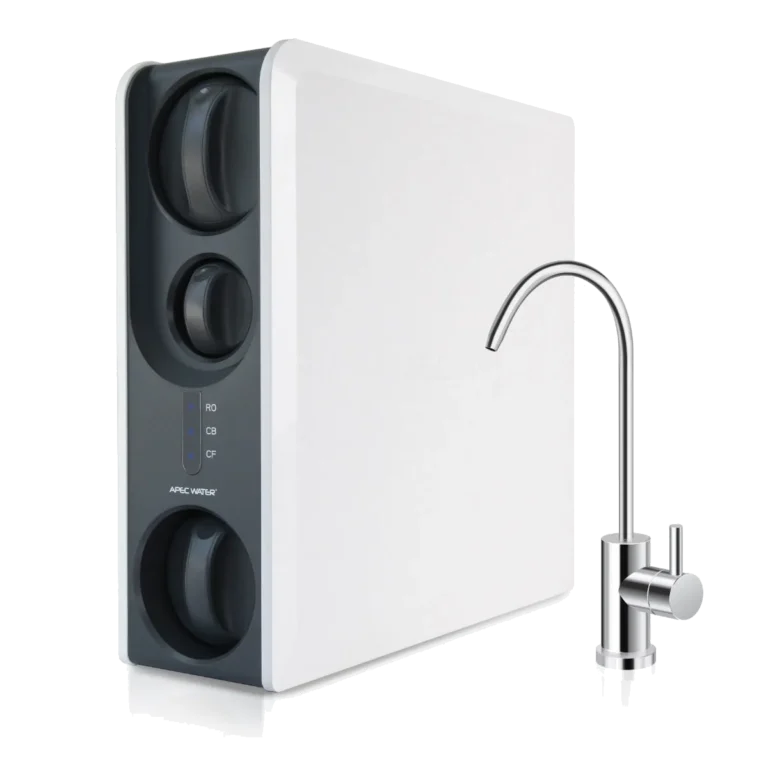
APEC ROTL‑600
$600 · 42nd of 69 in Reverse Osmosis
Buy Now- Warranty & Support — 3 against 1

 All 24 iSpring products
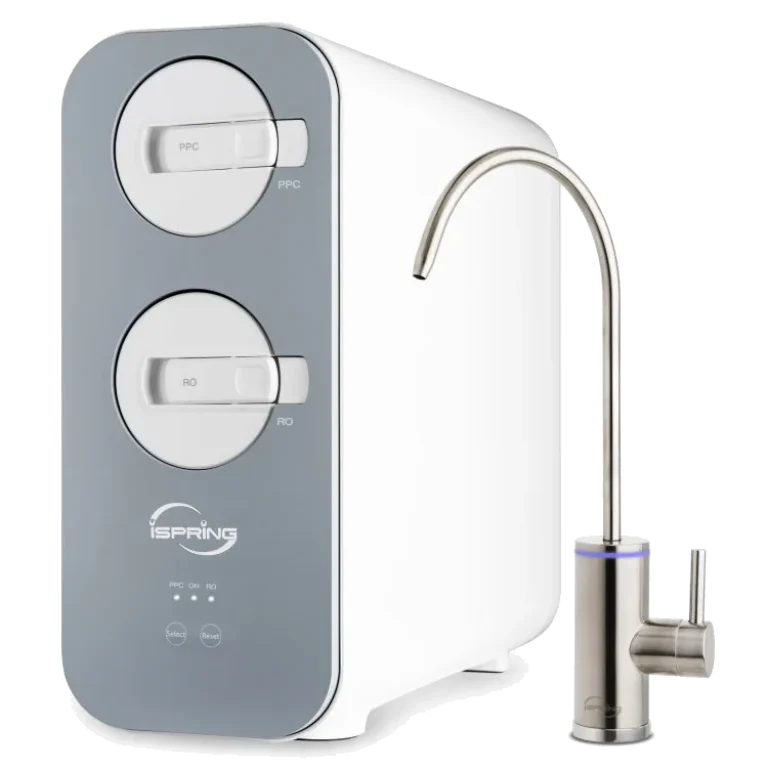
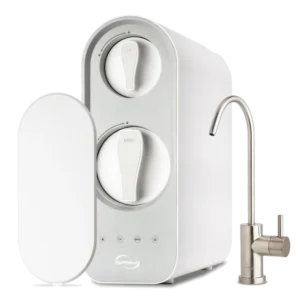
iSpring RO800G
$528 · 51st of 69 in Reverse Osmosis
Buy Now- Contaminant Reduction — 8 against 7
Across everything we scored, APEC ROTL-600 sits 0.24 ahead — led by warranty & support.
Verdict
ROTL-600 ahead · +0.24 (5.8 vs 5.5)Pick the APEC ROTL-600 when
Warranty & support matters3vs1
A longer warranty matters2 Yearsvs1 Year
Pick the iSpring RO800G when
Flow rate matters8vs7
Ease of installation matters8vs7
Contaminant reduction matters8vs7
Scored 16 September 2026 from published specs and owner reviews. We don't buy or test units. How we score
Usability APEC ROTL-600 and iSpring RO800G, scored 0 to 10
Contaminant ReductionAPEC ROTL-600: 7iSpring RO800G: 8 (higher)
APEC ROTL‑600
- Its weakest is that it does so with three stages rather than four, so the pre-treatment path is shorter than anything else in the range at any price.
iSpring RO800G
Nothing recorded.
Warranty & SupportAPEC ROTL-600: 3 (higher)iSpring RO800G: 1
APEC ROTL-600: 2 Years · iSpring RO800G: 1 Year.
- Flow RateAPEC ROTL-600: 7iSpring RO800G: 8 (higher)
- Build QualityAPEC ROTL-600: 7iSpring RO800G: 8 (higher)
Ease of InstallationAPEC ROTL-600: 7iSpring RO800G: 8 (higher)
APEC ROTL‑600
Nothing recorded.
iSpring RO800G
- Owner discussion of this model is about installation clearance and drain routing rather than performance, which is the profile of a system that works and is awkward to fit.
Same score
Certification CoverageAPEC ROTL-600: 2iSpring RO800G: 2
APEC ROTL‑600
Nothing recorded.
iSpring RO800G
- The catch is certification: iSpring publishes no NSF/ANSI listing for this model, so unlike the RCC7 line its contaminant numbers are manufacturer specifications rather than certified reductions.
Filter LifeAPEC ROTL-600: 5iSpring RO800G: 5
APEC ROTL‑600
Nothing recorded.
iSpring RO800G
- Two cartridges is also the simplest maintenance schedule iSpring sells, against the five a commercial unit needs, and the membrane is rated at 24 to 36 months.
ValueAPEC ROTL-600: 5iSpring RO800G: 5
APEC ROTL‑600
- It is also 300 dollars more than the ROTL-AIO for that trade, and neither model carries any certification.
- The buyer paying twice the price for the more efficient and less filtered of two otherwise similar systems is making a water-conservation decision rather than a filtration one.
iSpring RO800G
- It costs roughly a hundred dollars less than the 500 GPD RO500 while producing 60 percent more water.
- The single expensive item is that membrane at $149.99, which is the priciest cartridge in the consumer range and the reason the running cost is not as low as the cartridge count suggests.
Social score about the APEC ROTL-600 and the iSpring RO800G
RedditAPEC ROTL-600: 6iSpring RO800G: 7 (higher)
APEC ROTL‑600
Read the full summary
- Product-level.
- The ROTL-600 and its alkaline variant appear in r/WaterTreatment threads as the recommendation when a poster wants tankless output with remineralisation, and an owner running both APEC tankless units prefers this three-stage path to the single-cartridge all-in-one.
- The wider tankless threads still turn on power dependence and price.
iSpring RO800G
Read the full summary
- Product.
- An r/WaterTreatment thread compares the RO800G directly against the Waterdrop G3P800 and finds the two close on measured performance, with the Waterdrop carrying more features and the iSpring the cheaper route to the same output.
- A separate thread on this model is about where the drain line can go relative to a garbage disposal, which is the practical constraint on fitting it and is not in the installation manual.
- Wider tankless discussion in the same subreddit runs to filter cost, to fittings weeping on first install, and to TDS creep after the system sits idle.
GoogleAPEC ROTL-600: 6 (higher)iSpring RO800G: 5
The APEC ROTL-600 reading covers the whole brand; the iSpring RO800G reading covers the whole brand.
APEC ROTL‑600
Read the full summary
- Brand-level.
- No written source has independently tested the ROTL-600 or verified the one-to-one ratio it is sold on.
iSpring RO800G
Read the full summary
- Brand-level.
- No independent laboratory has published a test of any iSpring tankless system, and the absence is a choice by the testers rather than a shortage of them: RO-System.org, WaterFilterGuru, QualityWaterLab and Drinking-Water.org all lab-test this category and all of them publish on competing tankless models while testing no iSpring tankless unit.
- The coverage that does exist on this range is roundup and comparison writing reproducing the manufacturer's own figures.
- The published laboratory work on the brand is on the tanked RCC7 chassis, where verdicts conflict at 91 out of 100 against 6.64 and one site has withdrawn its recommendation, and none of it describes this system.
YouTubeAPEC ROTL-600: 5 (higher)iSpring RO800G: 4
The APEC ROTL-600 reading covers the whole brand; the iSpring RO800G reading covers the whole brand.
APEC ROTL‑600
Read the full summary
- Brand-level.
- No independent channel has tested this model.
iSpring RO800G
Read the full summary
- Brand-level.
- No independent channel has bench-tested any iSpring tankless system, and the results for these models are dominated by iSpring's own installation videos, which are first-party and excluded, and by affiliate roundups carrying discount codes rather than measurements.
- BOS Water's laboratory testing — the channel earns a commission on the system it tested — covers the tanked RCC7 chassis, where it found strong reduction alongside boron, vanadium and aluminium appearing in the filtered water, and that is a different platform from this one.
- Nothing in the video record measures output, efficiency or reduction on this system.
AmazonAPEC ROTL-600: 7iSpring RO800G: 7
The APEC ROTL-600 reading covers the whole brand; the iSpring RO800G reading covers its product line.
APEC ROTL‑600
Read the full summary
- Brand-level.
- The ROTL-600 listings carry no readable rating.
- Amazon's brand panel renders in two forms across APEC's listings: a proportion line reading 91 percent of ratings for the brand at 4-plus stars over 50,000-plus orders in the trailing three months, and a badge form carrying Highly Rated, Trending and Low Returns with no denominator.
- The proportion form is the scoreable one and is what carries here.
iSpring RO800G
Read the full summary
- Product-line.
- The 4.5 out of 5 across 219 ratings shown here is shared: the bare RO800G and the UV build print the identical figure and the identical Best Sellers Rank, so one review file serves both and nothing in it separates the UV stage from the system without it.
- Recorded at the platform for that reason, and at 219 ratings it is a thin pool next to the tanked line's five-figure counts.
- Amazon's brand panel puts 91 percent of iSpring ratings at four stars or better over 100,000-plus orders in the trailing three months.
Owner reviewsAPEC ROTL-600: 8 (higher)iSpring RO800G: 6
The iSpring RO800G reading covers its product line.
APEC ROTL‑600
Read the full summary
- Home Depot carries two listings for this system, reading 4.7 across 18 reviews and 4.5 across 61, and Walmart carries a third review file.
- The bodies are more informative than the average: one owner measured 53 ppm from a month-old ROTL-600 against 20 ppm from a four-year-old ROES-PH75 on the same supply, and another was told by APEC that the filters are made in China against a company statement about US manufacture.
- Trustpilot's brand profile is 4.1 from 658 reviews.
iSpring RO800G
Read the full summary
- Home Depot's file for the RO800G returns review bodies but no readable star average or recommend rate, and one of those bodies is labelled as coming from the 1000 GPD model, so the file is shared across the tankless range.
- Lowe's carries the same pattern from the other direction, with a review on its RO800G page describing the installation of the 600 GPD system.
- The readable figure on that shared file is 4.7 out of 5 at a 93 percent recommend rate, the lowest recommend rate in iSpring's Home Depot record, and it describes the platform rather than this model.
Unless a row says otherwise, both readings are about these exact models.
APEC ROTL-600 vs iSpring RO800G: pros and cons
APEC ROTL‑600
Overall score 5.8Strengths
- 600 GPD on demand with no storage tank
- LED filter life indicator and built-in leak detection
- Lead-free metal designer faucet included
- Compact footprint frees the cabinet space a tank would use
- One-to-one pure-to-drain ratiothe most efficient figure APEC publishes
Drawbacks
- 300 dollars more than the ROTL-AIO for one fewer stage
- No certification of any kind
- Requires an under-sink outlet and stops dispensing in a power cut
- Warranty is one year unless registered within eight weeks
- Three stages onlythe shortest pre-treatment path in the APEC range
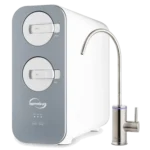
iSpring RO800G
Overall score 5.5Strengths
- 800 GPD at 0.6 GPMthe fastest flow in iSpring's consumer tankless range
- 2.5:1 pure-to-drain ratiothe most water-efficient in the line
- Membrane lasts 24 to 36 monthslonger than most tanked systems
- Automatic pre-flush protects the membrane after idle periods
- Per-stage indicator lights warn before a filter expires rather than after
- Cheaper than the 500 GPD RO500 despite higher output
- Only two cartridges to trackthe simplest maintenance schedule in the range
Drawbacks
- No published NSF/ANSI certification listingreductions are manufacturer specifications
- Requires an under-sink electrical outlet to run the booster pump
- No remineralization stageso water tastes flat compared with the alkaline models
- MRO800 membrane costs $149.99 to replacethe priciest single cartridge in the consumer line
- Municipal water onlywell water needs pre-treatment first
- Warranty is 1 year and requires product registration to activate
APEC ROTL‑600 vs iSpring RO800G: the numbers
Price, scores and rank, then only the specs that differ. Green marks the side with more.
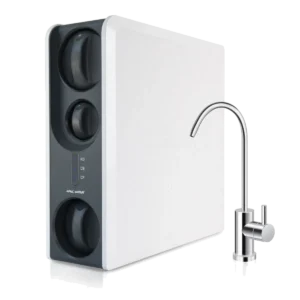
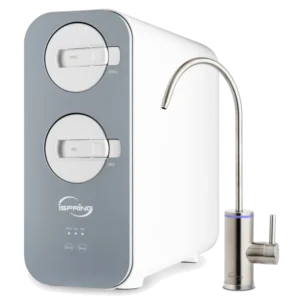
51st of 69 in Reverse Osmosis
BothArsenicChlorineFluoridePFASTDSLead
- WarrantyAPEC More2 YearsiSpring1 Year
- ConnectionAPECPoint of use fittingiSpringNot listed
- HousingAPECBPA-Free PlasticiSpringNot listed
- DimensionsAPECNot listediSpring17.75" x 6.50" x 17.75"
- WeightAPEC30 lb (shipping)iSpring23.6 lb
- Made inAPECUSAiSpringNot listed
Same on both
- Carbon Block, Reverse Osmosis, SedimentFiltration
- Not certifiedCertifications
- 500-1000 GPDFlow rate
- 6-12 monthsFilter life
We earn a commission if you buy through these links. It never changes a score.
Not sold on either one?
The top-scored and the cheapest other pick from each brand.
More from APEC Water Systems 13 scored in Reverse Osmosis
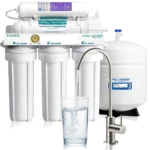
- Flow rate: Under 100 GPD vs 500-1000 GPD
- Filtration: adds Alkaline Remineralization and Granular Activated Carbon
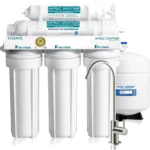
- Flow rate: Under 100 GPD vs 500-1000 GPD
- Filtration: adds Granular Activated Carbon
More from iSpring 23 scored in Reverse Osmosis
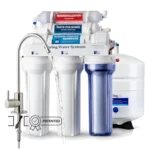
- Flow rate: Under 100 GPD vs 500-1000 GPD
- Filtration: adds Alkaline Remineralization and Granular Activated Carbon
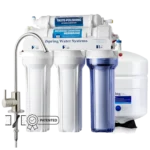
- Flow rate: Under 100 GPD vs 500-1000 GPD
- Filtration: adds Granular Activated Carbon
APEC ROTL‑600 vs iSpring RO800G: common questions
Is the APEC ROTL-600 better than the iSpring RO800G?
On our scores, the APEC ROTL-600 is ahead, 5.8 against 5.5. The APEC ROTL-600 leads on warranty & support (3 against 1). The iSpring RO800G leads on contaminant reduction (8 against 7), flow rate (8 against 7), build quality (8 against 7) and ease of installation (8 against 7).
Which is cheaper, the APEC ROTL-600 or the iSpring RO800G?
The iSpring RO800G, at $528 against $600: $72 less.
Which removes more contaminants, the APEC ROTL-600 or the iSpring RO800G?
The APEC ROTL-600 lists 11 and the iSpring RO800G lists 9, with 6 on both lists. Only the APEC ROTL-600 lists Heavy metals, Nitrate, Taste and Odor, Cysts and VOCs.
Which has the longer warranty, the APEC ROTL-600 or the iSpring RO800G?
The APEC ROTL-600: 2 Years, against 1 Year.
What do owners say about the APEC ROTL-600 and the iSpring RO800G?
Across 5 independent sources scored for both, the APEC ROTL-600 is ahead on Google, YouTube and Owner reviews; the iSpring RO800G is ahead on Reddit; Amazon is level.
More reverse osmosis comparisons
More head-to-heads with these two, plus the full brand comparison.
Scores calculated 16 September 2026 · Products excluded where fewer than two independent sources cover them · · How we score