iSpringRCC7AK 6-Stage Alkaline Reverse Osmosis System, 75 GPD
Six-stage under-sink reverse osmosis system with alkaline remineralization, rated at 75 GPD, NSF/ANSI 58 certified for TDS reduction.
$242
We may earn a commission if you buy through this link. It never affects our scores. How this works
Usability
Usability
The RCC7AK answers the main complaint about reverse osmosis, that stripped water tastes flat, by adding a remineralization stage returning calcium and magnesium. It carries the same NSF/ANSI 58 listing as the RCC7, covering TDS reduction only, for eleven dollars more, but the sixth filter adds height and roughly thirty dollars a year in running costs. This is the model iSpring sells most of and the only one in the range two independent labs have tested, which makes it the best-evidenced system the brand makes and not the best-performing. Both labs found strong overall reduction and both detected something in the filtered water that was not in the feed: one measured vanadium rising to 0.111 ppm and arsenic appearing where none had been detected, the other found vanadium at 0.02 ppm plus trace aluminium and boron more than tripling. Every one of those figures sits below the strictest health guideline either lab could cite, and none of it appears in iSpring's own account of the system. One of the two measured the remineralization stage lifting pH to roughly 9.7 while adding calcium and magnesium below the World Health Organization's recommended minimum, so the taste improvement is real and the mineral claim is thinner than it reads. It remains the system to buy on a tight budget, with more known about its weaknesses than about any competitor's.
- NSF/ANSI 58 certified as a complete system rather than by component, for TDS reduction at 97.9%
- Transparent first-stage housing allows filter inspection without opening it
- Alkaline stage returns 30 to 60 mg/l of calcium and magnesium, raising pH to 8 to 9
- Mercury rejection rated 96 to 98% and PCBs at 97%
- Only $11 more than the non-alkaline RCC7
- NSF certification covers TDS reduction only, not the lead figure iSpring publishes
- Sends roughly 3 gallons to drain for every gallon produced
- An inch taller than the RCC7, so under-sink clearance needs checking
- Annual filter cost is roughly $81 against $49 for the five-stage RCC7
- Warranty is 1 year and requires product registration to activate
- Push-to-connect fittings leak on initial installation for a minority of buyers
- Not designed to disinfect water or treat microorganisms
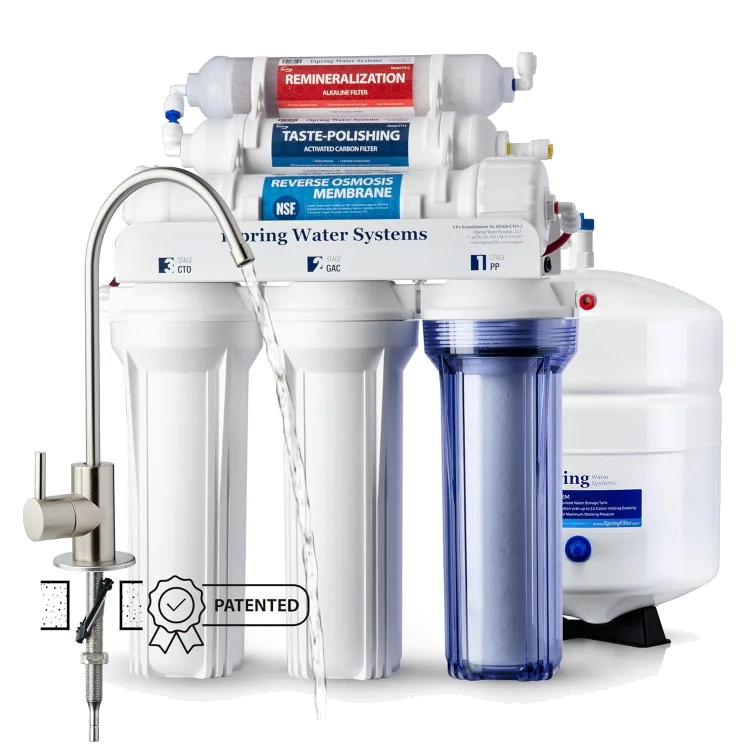
The iSpring RCC7AK is a six-stage under-sink reverse osmosis system rated at 75 gallons per day. It uses the same five stages as the RCC7 and adds an FA15 alkaline remineralization filter containing calcite, mineral stones and Corosex, returning 30 to 60 mg/l of calcium and magnesium and raising pH to roughly 8 to 9.
NSF lists the complete system under NSF/ANSI 58 for TDS reduction at 97.9 percent. The 98.9 percent lead figure iSpring publishes against it is a manufacturer claim rather than a certified reduction. Mercury rejection is rated 96 to 98 percent and PCBs at 97 percent. It runs without electricity at 45 to 70 psi feed pressure.
The extra stage makes the RCC7AK an inch taller than the RCC7, so under-sink clearance is worth measuring before ordering.
Additional information
Specification: iSpring RCC7AK 6-Stage Alkaline Reverse Osmosis System, 75 GPD
| Water Filtration Specifications | ||||||||||||||
|---|---|---|---|---|---|---|---|---|---|---|---|---|---|---|
|
||||||||||||||
| General Specifications | ||||||||||||||
|
||||||||||||||
Compared in
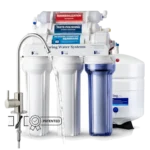 The best reverse osmosis systems · Ranked 10th of 69
 APEC ROES-PH75 vs iSpring RCC7AK · Reverse Osmosis
 iSpring RCC7AK vs Express Water RO5DX · Reverse Osmosis
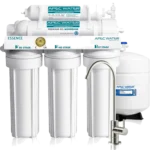
 APEC Water Systems vs iSpring · Reverse Osmosis
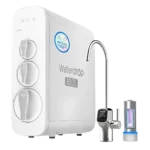
 iSpring vs Waterdrop · Reverse Osmosis
 iSpring vs Express Water · Reverse Osmosis
 iSpring vs Aquasure · Reverse Osmosis
Questions answered from our data
 How long do iSpring filters last?Of the 24 iSpring systems we list, 24 state a filter life; the most common is 6-12 months (22).
 How much does a reverse osmosis system cost?The 69 reverse osmosis systems we list run from $165 to $3,779, with a median of $367.
 How long do reverse osmosis filters last?Of the 69 reverse osmosis systems we list, 64 state a filter life; the most common is 6-12 months (62).
 Does reverse osmosis remove fluoride?63 of the 76 reverse osmosis systems we list claim to reduce fluoride.