Redodo 12V 100Ah Group 31 Basic LiFePO4 Battery
SVT Score, Top
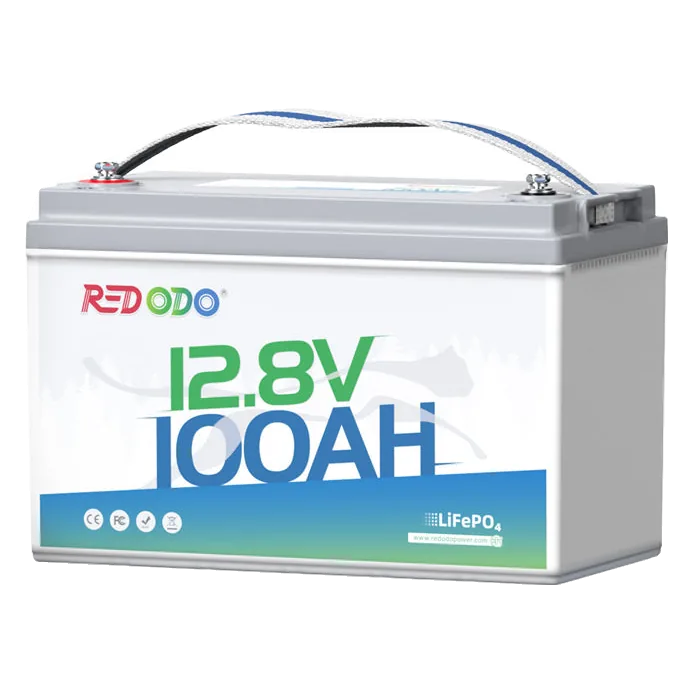
Redodo’s base 12.8 V, 100 Ah Group 31 LiFePO4 battery with a 100 A BMS and IP65 case, without Bluetooth, heating or a low-temperature cut-off.
$250
We may earn a commission if you buy through this link. It never affects our scores. How this works
Usability
5.6 out of 10It suits a buyer who wants a plain Group 31 drop-in for a bank that stays above freezing, and who will not need phone monitoring, cold-weather charging protection or closed-loop inverter communication.
Strengths
- 58.0 Wh per pound at 22.05 lb on the spec table
- IP65 protection class
- Up to four in series and four in parallelto 51.2 V 400 Ah
- 100 A continuous charge and discharge400 A for one second in the manual
- 5-year warranty with no proration stated
Drawbacks
- Spec table gives 22.05 lbthe page's feature text 25 lb
- Spec table gives a 300 A one-second surgethe manual 400 A
- No end-of-life capacity published for the cycle rating
- No low-temperature charge cut-offthough charging is rated only from 32°F (0°C)
- No Bluetoothheating or CAN/RS485 port
Specs
- Capacity1,000-1,499 Wh
- AC OutputNot applicable
- System Voltage12 V
- Panel PowerNot applicable
- Charge CurrentNot applicable
- Safety ListingUL 1973 listed
- Cell TypeNot applicable
- Low-Temp ChargingNone stated
- Warranty5 Years
- MonitoringNone
- Weight22.1 lb
At a glance
- 13 x 6.77 x 8.43 in
- M8 terminals, 16 mm bolts
- Flame-retardant ABS housing
- ≤40 mΩ internal resistance
Redodo is the brand of Shenzhen Maicheng Technology Innovation Co., Ltd. of Shenzhen, China, which holds its US trademarks and FCC grants, and its press releases give 2020 as its founding year.
It sells direct from redodopower.com, which ships US orders from US warehouses, and through its own Amazon and Walmart seller accounts, with separate stores for Canada, Germany, France, Spain and Japan.
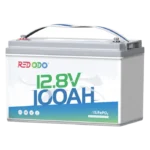
The Redodo 12V 100Ah Group 31 Basic (model FE-A14114N-0D, store SKU R12V100-100-BASIC-4-A100N) is a 12.8 V, 100 Ah (1,280 Wh) LiFePO4 battery of prismatic cells with a 100 A BMS: 100 A maximum continuous charge and discharge, 1,280 W maximum continuous output, 300 A for five seconds and a 300 A one-second surge on the spec table (400 A for one second in the manual), a 14.6 V charge voltage on the spec table (14.4 V ± 0.2 V in the manual) and a 20 A (0.2C) recommended charge current, charging from 32°F to 122°F (0 to 50°C) and discharging from -4°F to 140°F (-20 to 60°C), with internal resistance of 40 mΩ or less, an IP65 protection class, a flame-retardant ABS case and M8 terminals with 5/8 in (16 mm) bolts. It measures 13 x 6.77 x 8.43 in (329 x 172 x 214 mm), a BCI Group 31 size, and weighs 22.05 lb on the spec table (25 lb in the page's feature text). Up to four batteries connect in series and four in parallel, to 51.2 V 400 Ah. It sells as a 2-pack for $494.98, a 3-pack for $742.47 and a 4-pack for $979.96, and with a 14.6 V 20 A charger for $328.83. Six variants fold into this row: the Classic Look case (R12V100-100-Basic-4-A100, $249.99 on the same page); the Group 24 Basic ($237.99 on its own page, also listed at $279.99 on Redodo's All-Scenario page); the 12V 100Ah Trolling Motor, adding a low-temperature charge cut-off ($239.99); the Group 31 Bluetooth, adding Bluetooth and that cut-off ($265.99 on its own page, $289.99 on the All-Scenario page); the Group 24 Bluetooth ($260.99, $289.99 on the All-Scenario page); and the Ultra-Mini Bluetooth in a Group 22NF case with pouch cells at 19.8 lb ($264.99).

Questions answered from our data
 Is Redodo good?We list 13 Redodo products and score 13 of them. Their overall scores run from 4.9 to 6.3, with a median of 5.7, against a median of 5.5 for all 127 products we score.
 How much does a LiFePO4 battery cost?The 37 LiFePO4 batteries we list run from $220 to $1,089, with a median of $470.
 Are LiFePO4 batteries UL listed?Three of the 37 LiFePO4 batteries we list carry a UL 1973-type listing we could look up by model.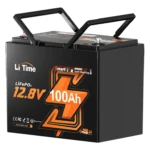
 Which LiFePO4 batteries can charge below freezing?Nine of the 37 LiFePO4 batteries we list heat their own cells so they can charge below freezing.