
Product comparison · Reverse Osmosis
Waterdrop G3P600 vs iSpring RO500
The Waterdrop G3P600 scores 9.0 and ranks 1st of 69 in Reverse Osmosis; the iSpring RO500 scores 6.0 and ranks 36th of 69 in Reverse Osmosis. The G3P600 leads on certification coverage.
 All 29 Waterdrop products
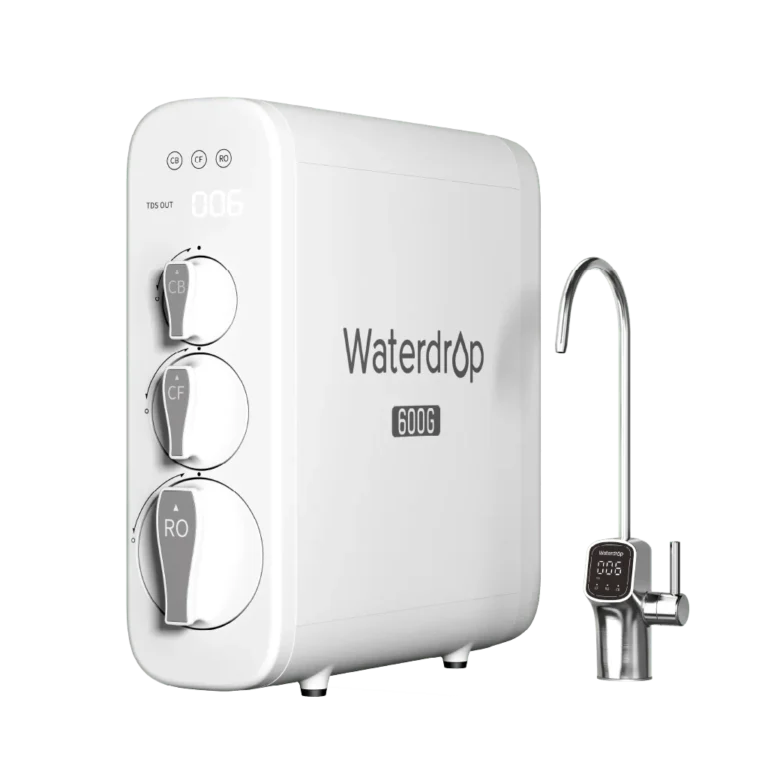
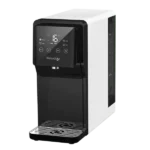
Waterdrop G3P600
$539 · 1st of 69 in Reverse Osmosis
Buy Now- Certification Coverage — 7 against 5

Across everything we scored, Waterdrop G3P600 sits 3.03 ahead — led by certification coverage.
Verdict
G3P600 ahead · +3.03 (9.0 vs 6.0)Pick the Waterdrop G3P600 when
Certification coverage matters7vs5
Value matters5vs4
Build quality matters9vs8
Pick the iSpring RO500 when
You want carbon block and sediment
Scored 16 September 2026 from published specs and owner reviews. We don't buy or test units. How we score
Usability Waterdrop G3P600 and iSpring RO500, scored 0 to 10
Certification CoverageWaterdrop G3P600: 7 (higher)iSpring RO500: 5
Both: NSF/ANSI 58; only the Waterdrop G3P600: NSF/ANSI 372.
Waterdrop G3P600
- Certification is where care is needed: Waterdrop's own product page claims NSF/ANSI 58 for TDS reduction and 372 for lead-free materials, while its Amazon listing title adds 42 and 53.
- We record the conservative pair the manufacturer states on its own site.
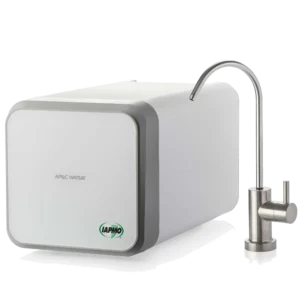
iSpring RO500
- the certification caveat is the same TDS-only scope as the rest of the line.
- No independent laboratory has tested this model or any other iSpring tankless unit, so everything beyond the TDS listing is the manufacturer's own figure.
ValueWaterdrop G3P600: 5 (higher)iSpring RO500: 4
Waterdrop G3P600
Nothing recorded.
iSpring RO500
- It is $33 cheaper than the alkaline RO500AK-BN and produces flatter-tasting water for the saving.
- Build QualityWaterdrop G3P600: 9 (higher)iSpring RO500: 8
Same score
Contaminant ReductionWaterdrop G3P600: 8iSpring RO500: 8
Waterdrop G3P600
- What it gives up is the UV sterilizer and a step down in efficiency, from 3:1 to 2:1 pure-to-drain.
iSpring RO500
Nothing recorded.
Flow RateWaterdrop G3P600: 7iSpring RO500: 7
Waterdrop G3P600
Nothing recorded.
iSpring RO500
- Within the tankless range it is the cheapest way to get the NSF listing at all, since nothing above 500 GPD carries one.
- Filter LifeWaterdrop G3P600: 5iSpring RO500: 5
- Warranty & SupportWaterdrop G3P600: 1iSpring RO500: 1
Ease of InstallationWaterdrop G3P600: 8iSpring RO500: 8
Waterdrop G3P600
Nothing recorded.
iSpring RO500
- Giving up the smart faucet means giving up the live TDS readout, which on a tankless system is the one cheap way an owner can see the membrane ageing.
Social score about the Waterdrop G3P600 and the iSpring RO500
RedditWaterdrop G3P600: 7iSpring RO500: 8 (higher)
Waterdrop G3P600
Read the full summary
- Product. r/WaterTreatment threads settle on the G3P600 as the default recommendation in brand comparison posts.
- Owners praise taste and the tankless design; the most-repeated complaint is the system flushing to drain every few hours, alongside a broader thread questioning how comprehensive the brand's NSF marks are.
iSpring RO500
Read the full summary
- Product.
- The RO500 is named in its own r/WaterTreatment threads: one owner reports it removed uranium that had tested high on their supply, and in a head-to-head against the Waterdrop G3P600 the deciding argument for iSpring is that its NSF certification is third-party where the competitor self-tests.
- Against that, the subreddit's general objection to tankless reverse osmosis is TDS creep during idle periods, and a separate thread records iSpring's own support recommending a tanked system over this line.
- Complaints specific to the tankless range run to filter cost and to fittings weeping on first install rather than to membrane performance.
GoogleWaterdrop G3P600: 9 (higher)iSpring RO500: 5
The iSpring RO500 reading covers the whole brand.
Waterdrop G3P600
Read the full summary
- Product.
- TechGearLab scored it 95 out of 100 and ranked it second of thirteen filters lab-tested, with 10.0 for PFAS and microplastics and 9.8 for lead and metals, marking it down on fluoride and nitrates against tanked RO systems.
iSpring RO500
Read the full summary
- Brand-level.
- No independent laboratory has published a test of this model or of any other iSpring tankless system, and the sites that lab-test this category have published on competing tankless units instead: RO-System.org's tankless roundup tests four rival systems and names no iSpring, and WaterFilterGuru's lists the tanked RCC7 among the systems that did not make its cut.
- The published laboratory work on iSpring is on the tanked RCC7 chassis and it splits, at 91 out of 100 at TechGearLab against 6.64 at WaterFilterGuru, so it establishes the brand's general standard rather than this system's performance.
- For this model the certifier listing is the third-party evidence and the editorial record is not.
YouTubeWaterdrop G3P600: 9 (higher)iSpring RO500: 4
The iSpring RO500 reading covers its product line.
Waterdrop G3P600
Read the full summary
- Product.
- BOS Water lab-tested it and called it the best under-sink reverse osmosis system on the market, scoring 4.64 out of 5, their highest of the three Waterdrop tankless units they compared.
- Noise is the caveat raised in the comments and in the video itself.
- The channel earns affiliate commission on the systems it links to.
iSpring RO500
Read the full summary
- Product-line.
- No independent channel has bench-tested this model or any other iSpring tankless system.
- The nearest thing is a 260,000-subscriber home-building channel that installed the alkaline build start to finish and states plainly that it has no equipment to measure parts per million, so its verdict is an installation account and a taste test. iSpring's own channel carries a builder-fronted review of this range and installation videos for most of the line, and those are first-party and excluded.
- BOS Water's laboratory work covers the tanked chassis instead, and the comparison content that ranks for this model carries discount codes for the competitor it is compared against.
AmazonWaterdrop G3P600: 9 (higher)iSpring RO500: 7
The iSpring RO500 reading covers its product line.
Waterdrop G3P600
Read the full summary
- Product.
- 4.5 from 4,100 ratings on the main listing.
- A bundle listing for the same system reads 4.3 from 606.
iSpring RO500
Read the full summary
- Product-line.
- The 4.6 out of 5 across 1,583 ratings shown here is a variation-family rollup: the plain RO500, the alkaline RO500AK and the alkaline-plus-UV build all print the identical figure and share the identical Best Sellers Rank, which three independently reviewed products do not do.
- Recorded at the platform rather than as this model's own score.
- Amazon's brand panel puts 91 percent of iSpring ratings at four stars or better over 100,000-plus orders in the trailing three months.
Owner reviewsWaterdrop G3P600: 9 (higher)iSpring RO500: 6
The iSpring RO500 reading covers its product line.
Waterdrop G3P600
Read the full summary
- Trustpilot's profile for this model reads 4.7 from 267.
- Walmart reads 4.8 from 196 ratings with 87 percent at five stars and 2 percent at one, and Target reads 4.9 from 187 on a bundle.
- The Walmart file mixes verified-purchase reviews with a smaller number of manufacturer-supplied ones.
iSpring RO500
Read the full summary
- Home Depot serves one review file across iSpring's entire tankless range rather than one per model, so no figure here belongs to this system on its own.
- That shared file reads 4.7 out of 5 at a 93 percent recommend rate, which is the lowest recommend rate in iSpring's Home Depot record against 98 percent on the tanked pumped system, and review bodies on individual tankless pages are labelled as coming from other models in the range.
- The file is mixed as well as pooled, carrying iSpring's own attribution line against individual reviews, so the recommend rate is the only figure in it worth reading.
Unless a row says otherwise, both readings are about these exact models.
Waterdrop G3P600 vs iSpring RO500: pros and cons
Waterdrop G3P600
Overall score 9.0Strengths
- 600 GPD is ample for a family of four
- Eight-stage filtration including PFAS and nitrate reduction
- Filters run about $145/yearthe cheapest in the G3 line
- Well covered by independent hands-on reviews
- Same tankless chassis and smart faucet as the flagship for $460 less
Drawbacks
- No UV sterilizer
- 2:1 pure-to-drain is less efficient than the flagship's 3:1
- Automatic flush cycles run every few hours
- One-year warranty
- Certification claims differ between Waterdrop's own site and its retail listings
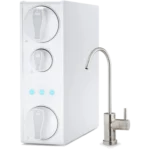
iSpring RO500
Overall score 6.0Strengths
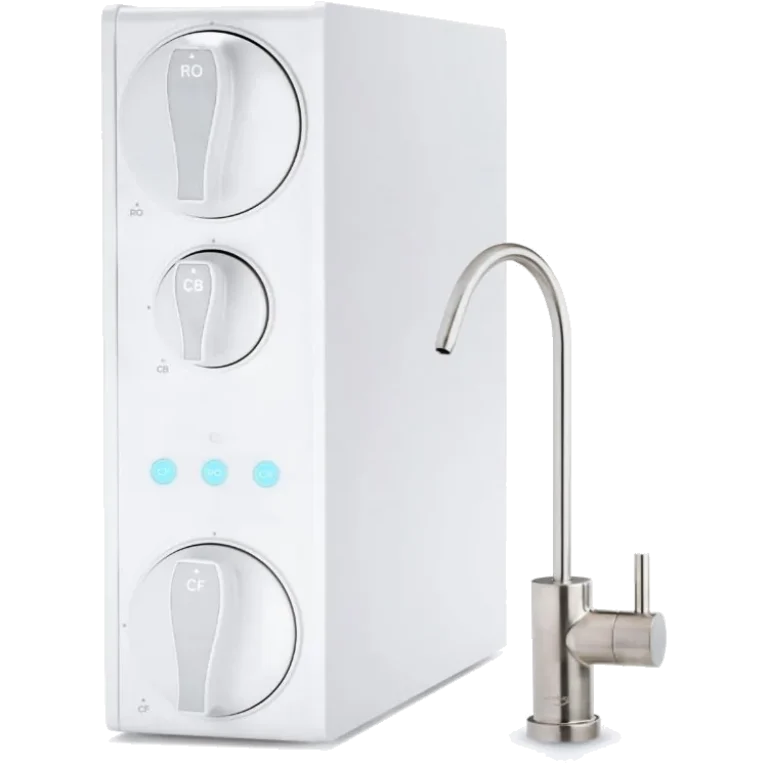
- Brushed nickel faucet suits kitchens where the smart faucet does not fit
- Tankless 500 GPD flow on demand with no storage tank
- 2:1 pure-to-drain ratio is efficient for reverse osmosis
- NSF/ANSI 58 certified for TDS reduction
- Internal booster pump supports low-pressure supply
- Same proven filter platform as the RO500
Drawbacks
- NSF certification covers TDS reduction only
- No live TDS readoutunlike the standard RO500 smart faucet
- Requires an under-sink electrical outlet
- Premium price for a finish change
- Municipal water only
- Assembled in China
Waterdrop G3P600 vs iSpring RO500: the numbers
Price, scores and rank, then only the specs that differ. Green marks the side with more.
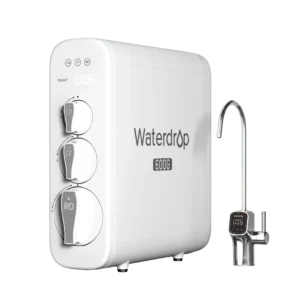
1st of 69 in Reverse Osmosis
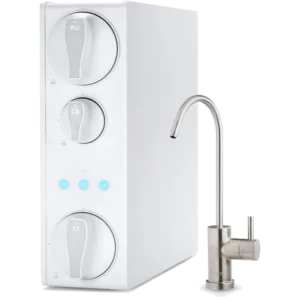
36th of 69 in Reverse Osmosis
BothReverse Osmosis
BothArsenicChlorineFluoridePFASTDS
- CertificationsWaterdrop MoreNSF/ANSI 58, NSF/ANSI 372iSpringNSF/ANSI 58
- ConnectionWaterdrop1/4 in, 3/8 iniSpringNot listed
- HousingWaterdropNot listediSpringNot listed
- DimensionsWaterdrop18.06 x 5.65 x 17.75 iniSpring17.50" x 5.12" x 16.25"
- WeightWaterdrop32.4 lbiSpring21 lb
- Made inWaterdropNot listediSpringChina
Same on both
- 500-1000 GPDFlow rate
- 6-12 monthsFilter life
- 1 YearWarranty
We earn a commission if you buy through these links. It never changes a score.
Not sold on either one?
The top-scored and the cheapest other pick from each brand.
More from Waterdrop 8 scored in Reverse Osmosis
- Certifications: adds NSF/ANSI 42 and NSF/ANSI 53
- Removes: adds Nitrate and Lead
- Flow rate: Under 100 GPD vs 500-1000 GPD
- Certifications: none listed
More from iSpring 23 scored in Reverse Osmosis
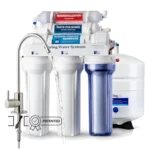
- Flow rate: Under 100 GPD vs 500-1000 GPD
- Filtration: adds Alkaline Remineralization and Granular Activated Carbon
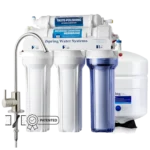
- Flow rate: Under 100 GPD vs 500-1000 GPD
- Filtration: adds Granular Activated Carbon
Waterdrop G3P600 vs iSpring RO500: common questions
Is the Waterdrop G3P600 better than the iSpring RO500?
On our scores, the Waterdrop G3P600 is ahead, 9.0 against 6.0. The Waterdrop G3P600 leads on certification coverage (7 against 5), value (5 against 4) and build quality (9 against 8).
Which is cheaper, the Waterdrop G3P600 or the iSpring RO500?
The Waterdrop G3P600, at $539 against $660: $121 less.
Which has more certifications, the Waterdrop G3P600 or the iSpring RO500?
The Waterdrop G3P600. The Waterdrop G3P600 lists NSF/ANSI 58 and NSF/ANSI 372; the iSpring RO500 lists NSF/ANSI 58.
Which removes more contaminants, the Waterdrop G3P600 or the iSpring RO500?
The Waterdrop G3P600 lists 9 and the iSpring RO500 lists 7, with 5 on both lists. Only the Waterdrop G3P600 lists Chloride, Chromium, Radium and Iron.
What do owners say about the Waterdrop G3P600 and the iSpring RO500?
Across 5 independent sources scored for both, the Waterdrop G3P600 is ahead on Google, YouTube, Amazon and Owner reviews; the iSpring RO500 is ahead on Reddit.
More reverse osmosis comparisons
More head-to-heads with these two, plus the full brand comparison.
Scores calculated 16 September 2026 · Products excluded where fewer than two independent sources cover them · · How we score